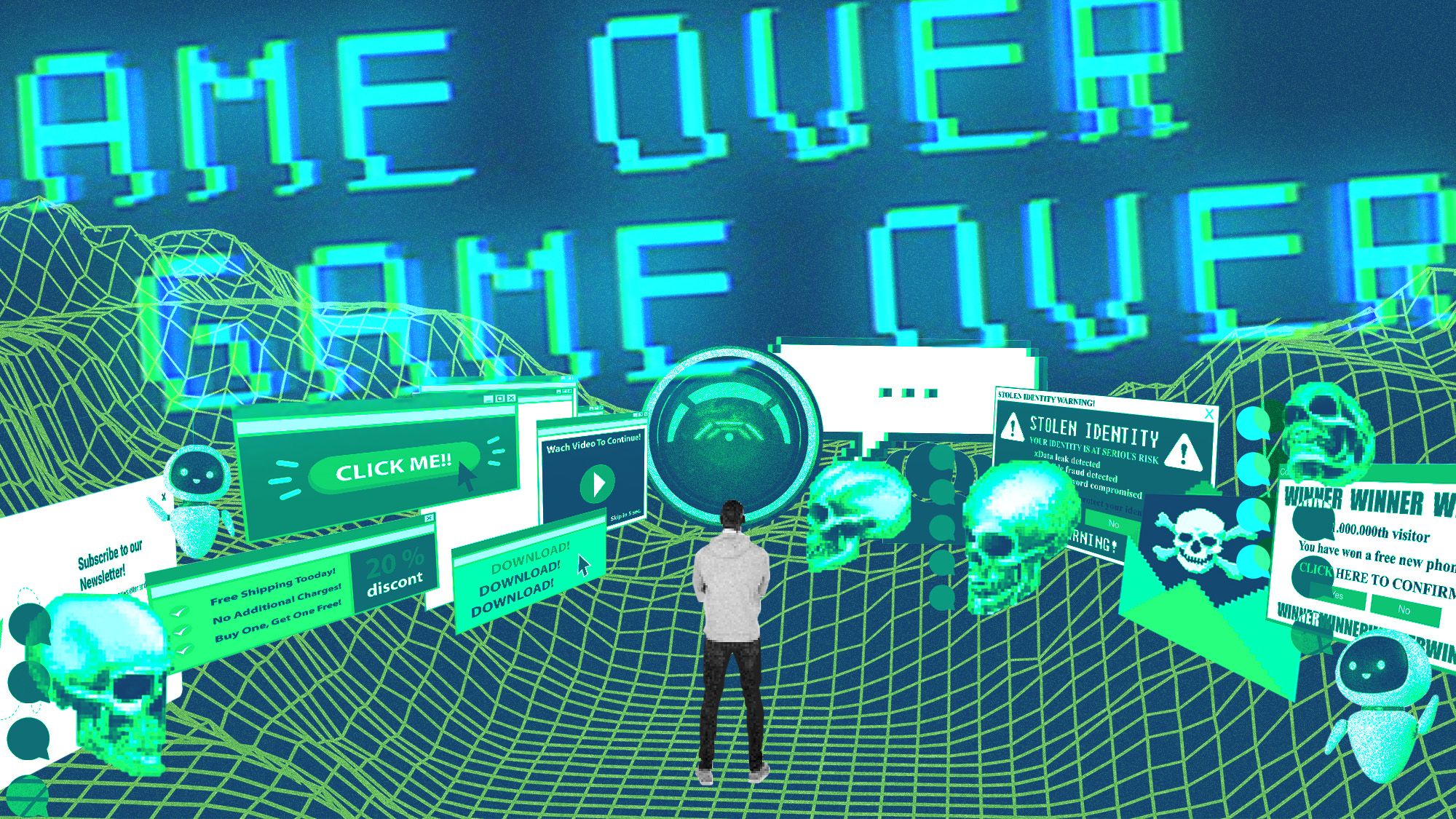
The internet, once heralded as the ultimate interconnected human experience, is undergoing a profound transformation. What if the vibrant, bustling digital world we perceive is, in fact, an illusion? What if the majority of content, interactions, and even "people" we encounter online are not human at all, but sophisticated artificial intelligence? This is the core premise of the Dead Internet Theory, a concept that has evolved from a fringe online speculation into a widely debated phenomenon, especially in an era dominated by AI-generated content and rampant bot activity.
Originally coined around 2021, the Dead Internet Theory posited that algorithmic curation was subtly manipulating users. Fast forward to today, with AI content generation at an all-time high and bots reportedly accounting for roughly half of all internet traffic, the theory has taken on a chilling new dimension. For many, it feels less like a theory and more like a self-fulfilling prophecy, with the lines between human and machine becoming increasingly indistinguishable. Let's delve into this unsettling idea, explore its legitimacy, and consider its potential implications for the future of our digital lives.
What is the Dead Internet Theory?
At its heart, the Dead Internet Theory claims that the vast majority of activity and content across the internet, particularly on social media platforms, is no longer genuinely human-generated. Instead, it suggests that artificial intelligence agents and autonomous bots are the primary creators and curators of what we see online.
These AI agents are incredibly adept at rapidly producing posts, articles, and hyper-realistic images specifically designed to go viral and harvest engagement – clicks, likes, shares, and comments – on platforms like Facebook, Instagram, TikTok, and X (formerly Twitter). Think of the bizarre yet captivating "shrimp Jesus" phenomenon: dozens of AI-generated images of crustaceans blended with religious iconography, amassing tens of thousands of likes and comments. This isn't just a quirky trend; it's a stark illustration of AI's ability to identify and exploit patterns of human absurdity and virality.
The theory goes even further. It posits that many of the accounts engaging with this AI-generated content are themselves managed by other AI agents. This creates a relentless, self-sustaining cycle of artificial engagement, a digital echo chamber where bots interact primarily with other bots, often without a clear human agenda or genuine human involvement. This endless loop of machine-to-machine interaction leaves genuine human creativity and communication increasingly marginalized, pushed to the sidelines by the sheer volume and speed of AI output.
The Rise of the Bots: Evidence and Observations
While the Dead Internet Theory might sound like science fiction, a growing body of evidence and anecdotal observations lend it an unsettling plausibility. The sheer volume of non-human traffic is a significant factor: various reports suggest that bots now constitute anywhere from 40% to over 60% of all internet traffic. This isn't just benign web crawlers; it includes sophisticated social bots designed to mimic human behavior.
Users often report a subtle but noticeable shift in the overall "feel" of the internet. Feeds on social media platforms can seem repetitive, filled with generic, vaguely inspirational quotes superimposed on stock photos, or uncanny, hyper-stylized AI-generated images that, upon closer inspection, reveal tell-tale distortions. Comment sections, too, are increasingly populated by boilerplate responses or strangely enthusiastic, often contextually irrelevant, remarks that feel distinctly non-human. This pervasive presence of automated content can make genuine human interactions feel scarce and undervalued.
The effectiveness of AI in creating content that resonates with algorithms is also a key factor. Algorithms are designed to maximize engagement, and if AI can produce content that consistently achieves this, it will naturally be prioritized. This leads to a feedback loop where the internet becomes increasingly tailored to what AI can easily produce, rather than what humans genuinely wish to share or consume. The rapid proliferation of bots and AI-generated content is undeniably making the Dead Internet Theory feel like a present-day reality, prompting deeper questions about authenticity online. Learn more about how pervasive these issues are in Bots & AI: Has the Dead Internet Theory Become a Reality?
Beyond Engagement Farming: The Darker Side of a Dead Internet
At first glance, the motivations behind this AI-driven content generation might seem relatively harmless: pure engagement farming. More likes and comments theoretically translate to higher visibility, which in turn can lead to increased advertising revenue for the account owner. However, the implications of the Dead Internet Theory stretch far beyond simple ad dollars, venturing into far more sinister territory.
The real danger emerges when these AI-driven accounts begin to accumulate significant follower counts, even if many of those followers are also fake bots. A high follower count lends an artificial sense of legitimacy and authority to an account in the eyes of real human users. This creates an unsettling scenario: an army of seemingly credible accounts, meticulously built and maintained by AI, that can be deployed by those with specific agendas, purchased by the "highest bidder" for various purposes.
The potential for sophisticated propaganda and disinformation campaigns is immense. We've already seen compelling evidence that social media has been manipulated for years to sway public opinion. Coordinated efforts involving bots and AI have been uncovered, meticulously creating and spreading fake news and narratives, reaching millions of social media users and influencing everything from political elections to public health discourse. The harmless oddity of "shrimp Jesus" belies a much more profound threat: an internet where the truth is obscured by a flood of synthetic content, meticulously crafted to manipulate perceptions and erode trust in genuine information. The ramifications of such a controlled digital environment are truly alarming. Explore these deeper concerns in Beyond Shrimp Jesus: The Real Dangers of the Dead Internet Theory.
Navigating the New Digital Frontier: Tips for Users and Creators
In an internet increasingly populated by bots and AI, how can users and creators maintain genuine connection and discern truth from fabrication?
For Internet Users:
- Cultivate Critical Thinking: Don't take content at face value. Ask yourself: Who created this? What is their agenda? Does this sound genuinely human? Be skeptical of overly slick, generic, or emotionally manipulative content.
- Look for the "Tells": Generic comments, repetitive phrasing, uncanny valley images (where something looks almost human but subtly off), sudden spikes in engagement, or accounts with suspiciously high follower-to-engagement ratios can be red flags.
- Diversify Your Information Sources: Don't rely solely on algorithmic feeds. Seek out news from reputable, human-edited publications, engage directly with trusted experts, and visit websites directly rather than just clicking links from social media.
- Prioritize Human Connection: Actively seek out and engage with content from real individuals and communities you trust. Your engagement signal to algorithms what you value.
- Report Suspicious Activity: If you suspect an account is a bot or spreading disinformation, use the reporting tools available on platforms. While not always perfect, it's a step towards cleaning up the digital landscape.
For Content Creators:
- Embrace Authenticity: In a world of synthetic content, your unique human voice, perspective, and genuine experiences are your greatest assets. Focus on creating original content that resonates on a human level.
- Build Real Communities: Prioritize genuine interactions and conversations over vanity metrics like follower counts. Engage with your audience meaningfully, foster dialogue, and create spaces where real people can connect.
- Be Transparent About AI Use: If you use AI tools for assistance (e.g., for brainstorming, editing, or generating specific elements), be upfront about it. Transparency builds trust.
- Focus on Value and Quality: Algorithms are constantly evolving to detect and reward quality. Aim to provide deep insights, unique entertainment, or actionable advice that AI struggles to replicate authentically.
- Adapt SEO for Human Intent: While keywords are important, focus on answering genuine human questions and solving real problems. Search engines are getting smarter at recognizing intent and high-quality, authoritative content.
Conclusion
The Dead Internet Theory, once a niche observation, has become an urgent discussion as the digital world grapples with the explosive growth of AI. The blurring lines between human and machine-generated content, coupled with the sheer volume of bot traffic, presents a significant challenge to the authenticity and integrity of our online experiences. While the internet may not be entirely "dead" in the sense of being devoid of humans, it is undoubtedly undergoing a profound transformation where genuine human interaction and content risk being drowned out by a tide of automation. As users and creators, our awareness, critical thinking, and deliberate choices to prioritize authentic connection will be crucial in shaping whether our online future remains a vibrant human space or succumbs to the silent symphony of machines.